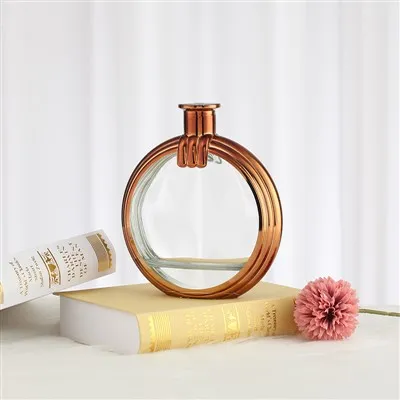
Classification Of Glass Bottle Materials
Leave a message
The material of glass bottles actually has two classification systems, and many people tend to confuse them.
By chemical system (determining heat resistance and safety)
Sodium calcium glass, borosilicate glass, lead-containing/lead-free crystal glass
By "material color" (determining transparency and grade)
Blue-white material, common white material, high white material, crystal white material, milky white material
These two systems are interrelated - for example, "high white material" is essentially still sodium calcium glass, just with a lower iron content. When choosing materials for wine bottles, both systems need to be considered.
By chemical system (three categories)
1. Sodium calcium glass (ordinary glass)
The main components are silicon dioxide (70-75%), sodium oxide (12-16%), calcium oxide (8-12%) 1.
Advantages: low cost, simple processing, large output
Disadvantages: can withstand a temperature change range of about 50-60℃ only, sudden cooling and heating can cause cracking; impact resistance is average
Application: beer bottles, wine bottles, liquor bottles, beverage bottles, pickles bottles, storage cans - most glass bottles on the market are this type 11
2. Borosilicate glass (heat-resistant glass)
Added with boron oxide on the basis of sodium calcium, and classified by boron content as high borosilicate, medium borosilicate, low borosilicate.
Advantages: extremely low thermal expansion coefficient, can withstand a temperature difference of -30℃ to 400℃, can be directly heated by fire; excellent chemical stability, almost no heavy metal precipitation 1
Disadvantages: about 2-3 times the price of sodium calcium glass, more complex processing 1
Application: laboratory beakers, heat-resistant teapots, coffee pots, baby bottles, medicinal injection bottles, some high-end craft wine bottles 11
3. Crystal glass (crystalline glass)
Added with lead oxide or barium oxide, potassium, etc., with high refractive index.
Lead-containing crystal: light transmittance 94-96%, the most brilliant refractive effect, but international standards stipulate that beverages should not be stored in containers with a lead content of ≥24%, and long-term contact with acidic liquids (lemonade, wine) has the risk of lead leaching
Lead-free crystal: potassium and barium are used to replace lead, safety is significantly improved, the appearance level is almost no reduction, it is currently the mainstream
Application: high-end red wine glasses, whisky glasses, art pieces, collector's grade fragrance bottles
According to material color classification
1.Blue-white material / common white material → low-end transparent bottles for liquor, commonly found in fourth-tier cities' rural channels, texture is poor, often covered with spraying techniques to hide flaws
2.High white material → the most widely used, with the highest price and visual perception value, suitable for large circulation liquor and mid-range products
3.Crystal white material → touch feels smooth like jade, high density, high refractive index, mostly used for mid-to-high-end liquor, many transparent glass liquor bottles priced above 700 yuan on the market are selected for it
4.Crystal material → wine bottles are basically not used, the price is extremely high, mainly reserved for high-end perfume bottles